
Are you struggling to decide between a pivot door and a hinged door for your bathroom? Choosing the wrong door style can cause serious wall clearance problems.
The main difference is the mount location. Hinged doors attach to the side frame or wall to open fully, while pivot doors rotate on top and bottom pins set slightly inward, reducing door swing clearance in tight bathrooms.
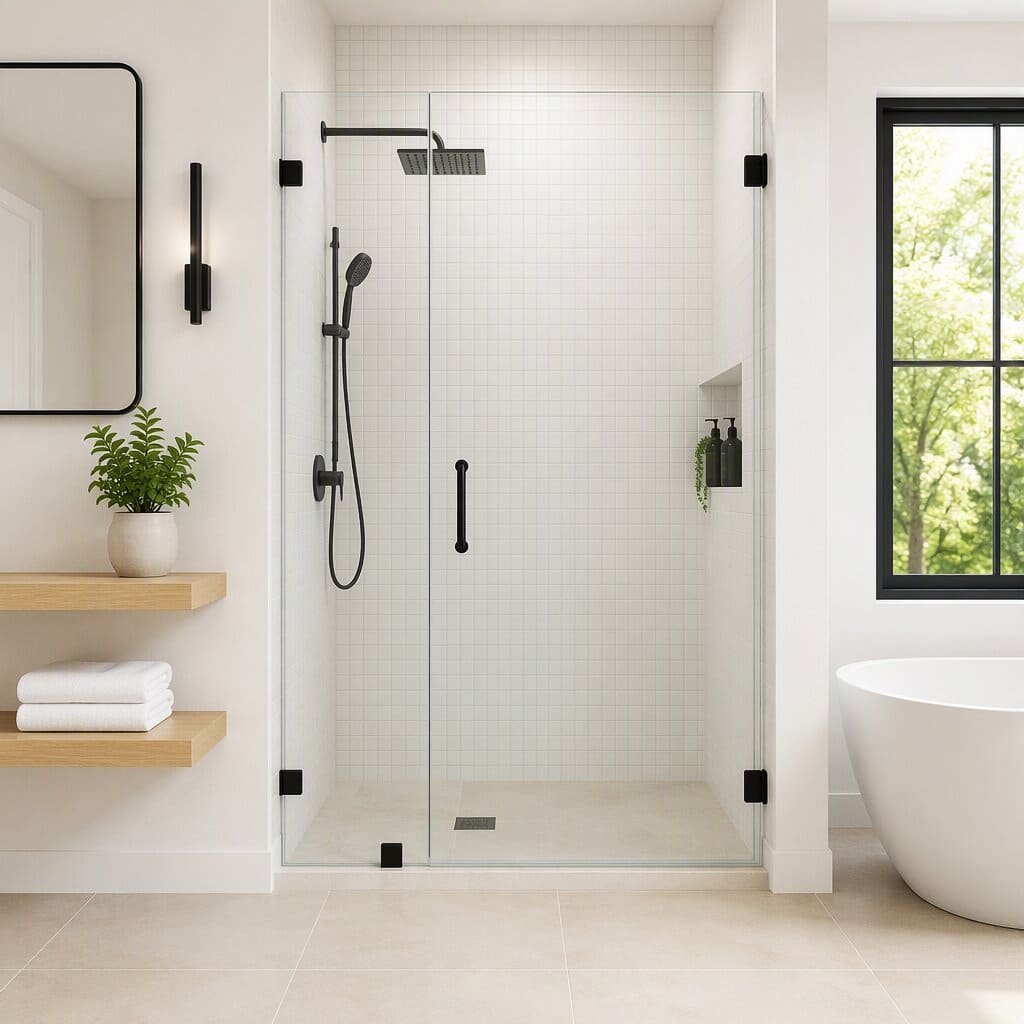
In my 17 years running DFN shower door in Foshan, I have manufactured both pivot and hinged hardware for builders across North America. Let me break down the real physical differences so you can make the right call for your space.
What are the disadvantages of pivot doors?
Are you worried a pivot shower door will leak or steal space? Buying the wrong door hardware leads to water damage and costly job site delays for your project.
The main disadvantages of pivot doors include reduced entry clearance because the hinge pin sits inside the frame, potential water dripping onto bathroom floors when opening, strict requirements for level surfaces during installation, and higher hardware costs compared to basic framed doors.
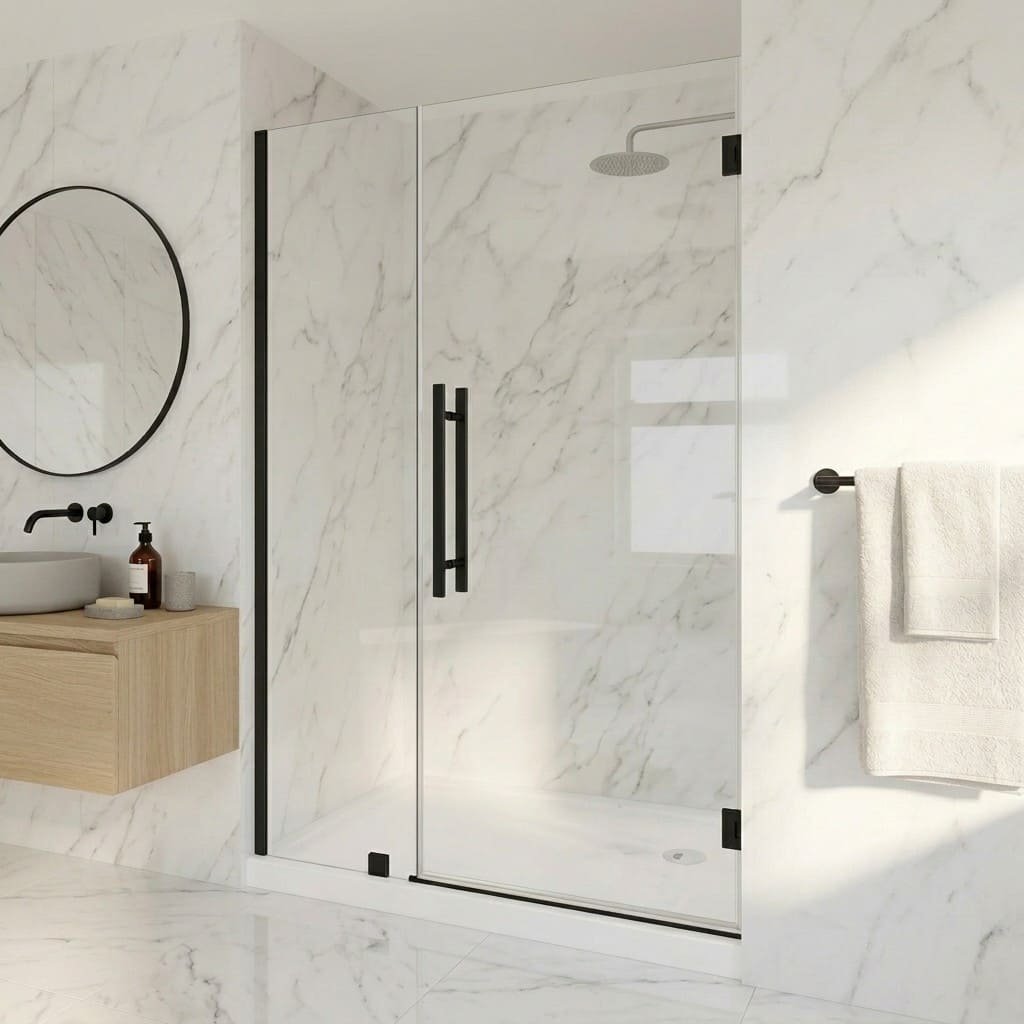
In my 17 years running DFN shower door in Foshan, China, I have seen many project managers install pivot doors without understanding their limits. While pivot doors look modern, they introduce specific structural and mechanical drawbacks. You must evaluate these factors before ordering them for your building project.
Reduced Entry Clearance and Space Loss
A pivot hinge does not attach to the outer edge of the wall. It sits two to four inches inside the door frame. When you open the door, the rear glass edge swings back into the shower stall while the front glass edge swings out into the room. This mechanism cuts total walk-in width by up to 10 percent. If your shower opening is smaller than 30 inches wide, entering the shower stall becomes narrow and tight for users.
Water Leakage and Floor Drip Issues
Pivot doors can create water control challenges for hotel owners and homeowners. When someone opens the door right after a shower, water clinging to the inner glass face drips directly onto the dry bathroom floor. Without special bottom sweeps or sloped thresholds, water will pool on tiles outside the shower. This creates slip hazards and damages subfloors over time.
Strict Installation and Surface Level Demands
Pivot doors transfer all glass weight down to a floor pin. This means your floor surface and top header track must be completely level. If your floor slopes by even two or three millimeters, the glass door will bind, scrape the floor, or fail to close correctly. For regional contractors like Tom Martinez, unlevel floors mean high labor costs and lost time.
High Structural Load on Floor Anchor Points
Because the lower pivot pin carries the heavy SGCC-certified safety glass, the bottom anchor point takes constant force. If you install a pivot door on weak subflooring or soft tiles without proper support, the pin can work itself loose after thousands of uses.
How We Solve These Problems at DFN Shower Door
To eliminate these disadvantages for our clients, our engineering team redesigned our pivot hardware kits:
- We use off-center pivot placement to maximize usable walk-in space.
- We supply pre-drilled glass with dual-lip magnetic seals and deflector sweeps.
- We coat our glass with Nano self-cleaning technology so water slides off instantly.
- We engineer micro-adjustable Grade 304 stainless steel pivot pins that allow installers to adjust alignment by 5mm on-site. This saves contractors 1.5 hours of labor per installation.
| Disadvantage | Real-World Impact | DFN Factory Engineering Solution |
|---|---|---|
| Narrow Walkway | Reduces total door opening width by 2-4 inches | Engineered off-center pin locations to maximize entry clearance |
| Water Drips on Floor | Drips pool on bathroom tile, creating slip hazards | Dual-lip PVC seals, magnetic strips, and Nano hydrophobic coating |
| Alignment Sensitivity | Unlevel floors cause glass dragging or door binding | Micro-adjustable stainless steel pins for 5mm quick alignment tweaks |
| Floor Stress Points | Heavy glass exerts downward force on bottom anchor | Heavy-duty Grade 304 stainless steel floor plates and solid wall anchors |
| Higher Initial Cost | Specialized components cost more than basic sliding tracks | Direct factory supply with zero middleman markup and low MOQ from 1 set |
What is the difference between a pivot door and a hinged door?
Are you confused by similar-looking glass doors and afraid of ordering the wrong hardware? Misunderstanding hinge mechanics can lead to broken glass during installation.
Hinged doors attach directly to a wall or glass panel using side-mounted hinges, creating a 180-degree swing, whereas pivot doors rotate around a fixed vertical axis anchored into the header and floor track.
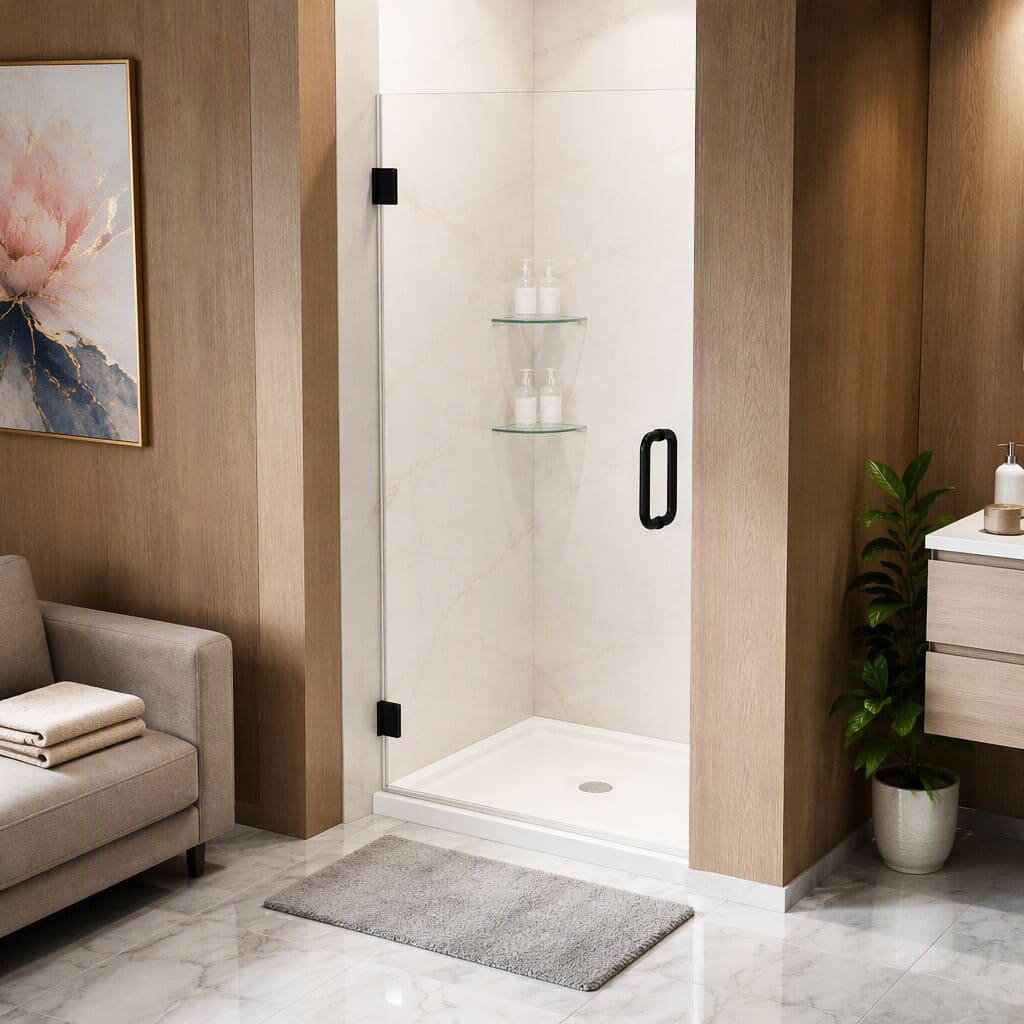
Understanding the structural difference helps you pick the right glass thickness and frame style. Pivot doors rely on aluminum framing and top-and-bottom pin hinges. Because the aluminum frame supports the door structure, pivot doors typically use thinner 6mm or 8mm tempered glass. This keeps the total unit lightweight and far more budget-friendly.
In contrast, hinged doors attach directly to a wall or glass panel using heavy solid metal hinges. To prevent wobbling, hinged doors require thick, heavy 10mm or 12mm SGCC-certified safety glass. The entire weight of this heavy glass pulls sideways against the wall studs, requiring solid wall blocking behind your tiles.
In our Foshan facility, we manufacture both styles using CNC cut aluminum 6063/6064 profiles and Grade 304 stainless steel hardware. For hotel owners like Sarah Williams, hinged doors give a frameless, high-end luxury look that impresses guests. For budget-conscious property developers like Mark Stevens, aluminum pivot doors offer a reliable, cost-effective solution across multi-unit projects.
| Feature | Pivot Shower Door | Hinged Shower Door |
|---|---|---|
| Main Material | Lightweight aluminum profile track | Heavy-duty solid metal wall hinges |
| Glass Thickness | 6mm to 8mm tempered glass | 10mm to 12mm heavy safety glass |
| Structural Support | Aluminum frame + floor pin support | Wall studs carry all glass weight sideways |
| Manufacturing Cost | Lower (less glass weight, simpler hardware) | Higher (thick glass, heavy metal hinges) |
| Entry Width | 85-90% opening width (pin reduces entry) | 100% full opening width |
Are pivot doors worth it?
Do you wonder if pivot doors are worth the installation effort for your housing project? Buying low-quality glass hardware can ruin your building budget and timeline.
Yes, pivot doors are worth it for wide or irregular shower openings because they distribute heavy glass weight directly to the floor, reducing wall stress and allowing smooth, effortless operation for years.
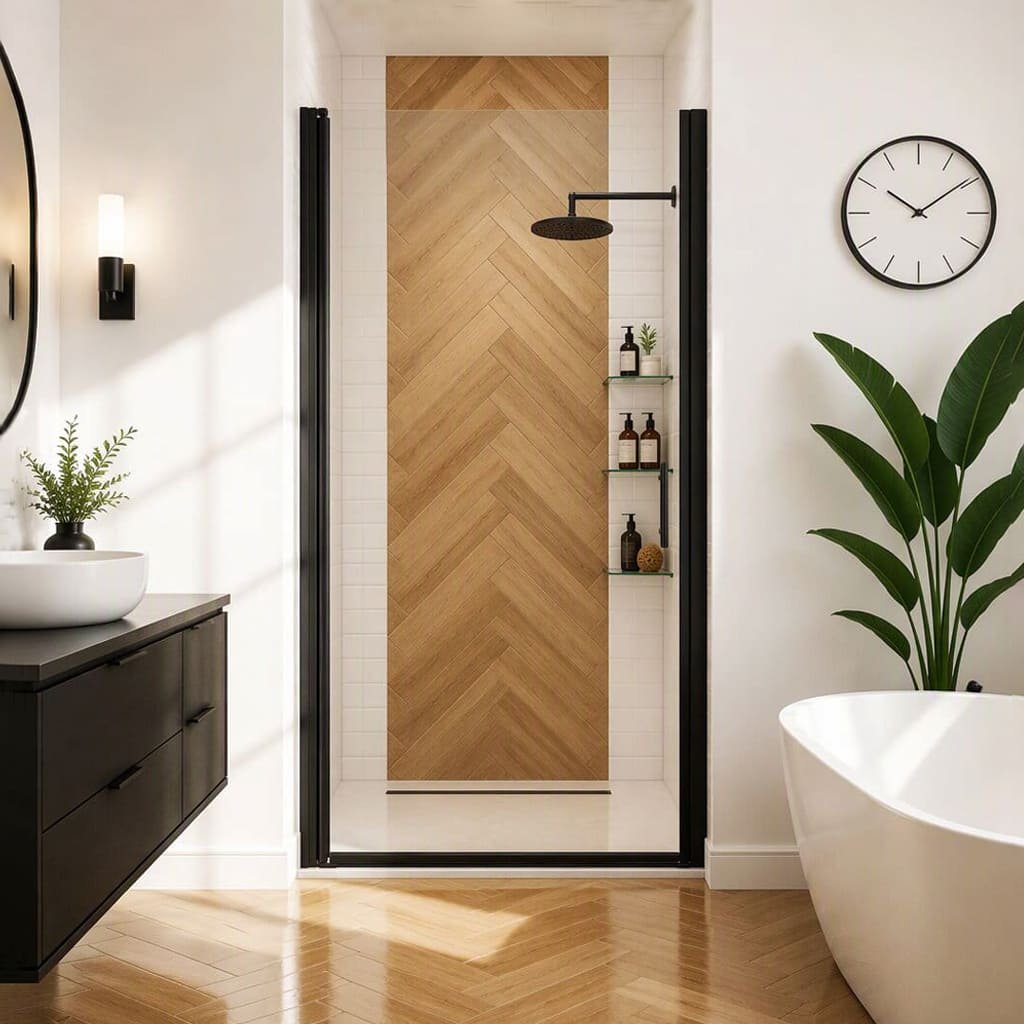
Pivot doors are definitely worth the investment under the right layout conditions. If your shower opening is wide, a single hinged door might be too heavy for side wall brackets. A pivot door solves this problem easily because the weight rests securely on the floor. This makes pivot hardware ideal for modern frameless designs with thick, heavy tempered glass.
Pivot doors also perform extremely well in high-frequency commercial settings. At DFN shower door, our engineering hotline receives many calls from hotel developers like Mark Stevens. Mark needs hardware that can handle thousands of guest uses without sagging over time. Our pivot pins pass 100,000-cycle stress tests in our QC testing lab.
When paired with our factory Nano self-cleaning glass coating, pivot doors stay cleaner longer and require less maintenance. If you have solid flooring and want a stable, long-lasting glass door that will not sag, a pivot door is worth every dollar.
| Buyer Persona | Why Pivot Doors Are Worth It | Key Benefit |
|---|---|---|
| Property Developers | Reduces wall framing costs; stress goes to the floor | Lower risk of wall stud failure |
| Hotel Owners | Smooth rotation withstands heavy daily guest use | 100,000-cycle tested durability |
| Distributors | Fits versatile opening sizes with minimal SKUs | Standardized parts lower inventory risk |
Are pivot doors more expensive?
Are you working on a strict budget and worried that pivot doors will blow your costs out of control? Price confusion can slow down your project planning.
Pivot doors are generally comparable in price to hinged doors, but specialized frameless pivot systems with heavy header tracks can cost 10% to 20% more due to heavier structural hardware and precision glass cutting.
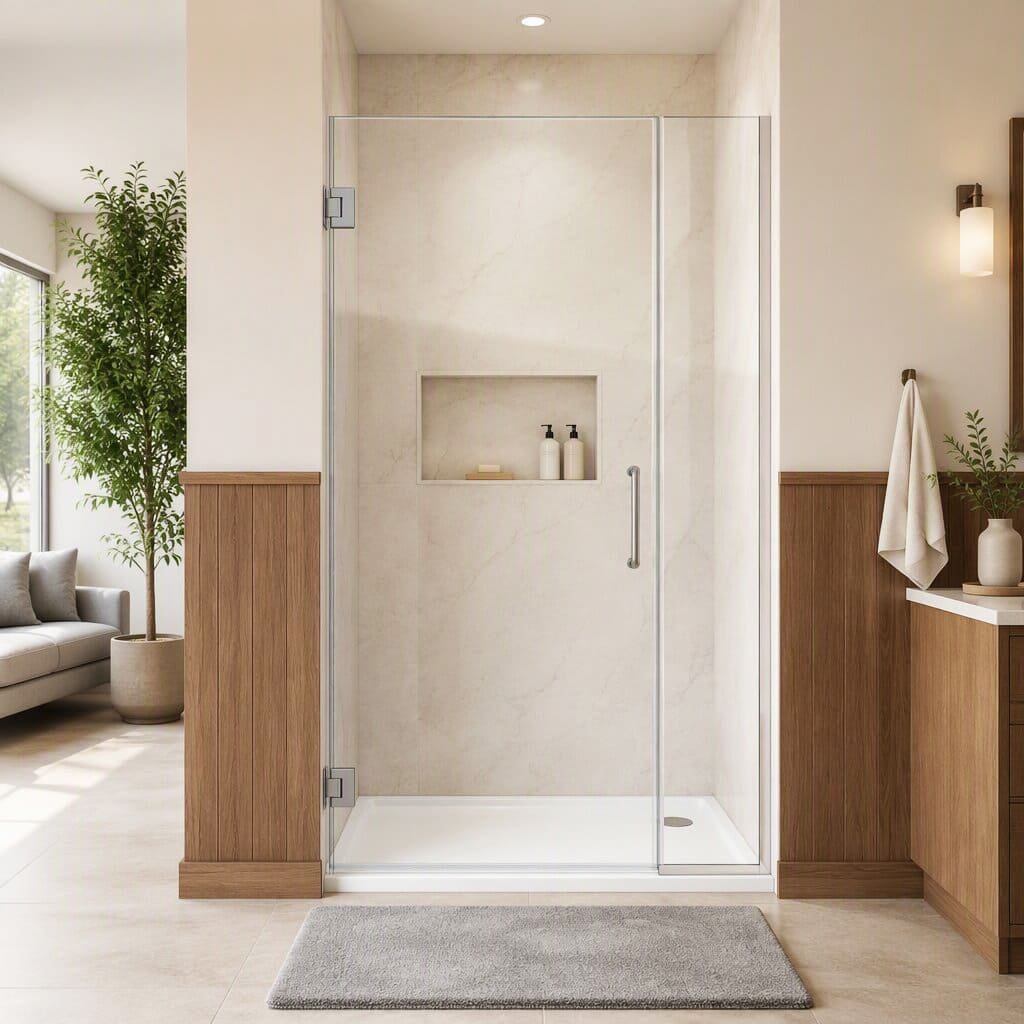
When comparing total costs, you must look at hardware prices, shipping fees, and installation labor. Standard framed pivot door kits are actually very affordable. However, custom frameless pivot systems cost more upfront because they use thick 10mm or 12mm tempered safety glass along with heavy-duty Grade 304 or 316 stainless steel pivot pins.
At DFN shower door, we help distributors like John Parker keep their cash flow healthy. We offer flexible MOQs starting from 1 set and fast 25-day bulk lead times directly from our factory floor in Foshan. Because we manufacture all hardware in-house with automated CNC cutting machines, we eliminate middleman markup.
Furthermore, our simple installation designs save clients 1.5 hours per door on labor. Even if a luxury pivot system has a slightly higher initial hardware price, the savings on labor costs and zero warranty callbacks make the overall project cost much lower in the long run.
| Cost Category | Aluminum Pivot Door (6mm - 8mm) | Frameless Hinged Door (10mm - 12mm) |
|---|---|---|
| Raw Glass Cost | Lower (lighter 6mm / 8mm glass) | Higher (heavy 10mm / 12mm glass) |
| Hardware Material | Cost-effective aluminum profiles + pins | Heavy solid stainless steel/brass hinges |
| Shipping Weight | Lighter (lower sea freight cost per set) | Heavy (higher freight cost per unit) |
| On-Site Labor | Fast assembly with pre-drilled aluminum | Requires two installers to handle heavy glass |
| Overall Project Value | High economy; best for volume projects | Luxury aesthetic; best for high-end suites |
Conclusion
Hinged doors offer maximum entryway clearance, while pivot doors transfer glass weight to the floor, making pivot doors the better choice for wide, heavy glass openings.